Sunday, 27 July 2025

A Kelling Memory


Autumn and winter days at our cottage in Kelling were marked occasionally by the arrival of guests of the Kelling estate. These guests - paying guests - came for the entertainment offered by the regular pheasant shoots. Here is a reflection, written as the spent pellets rained upon our cottage conservatory. It was completed in Oxfordshire sunshine a few days ago.

The Reluctant Sportsman

The guns speak a fate. Keep 
Brave as the birds break cover.
Squeeze the trigger. The flock in disarray
Hovers then darts loose over the fields.
Shame hinges on a miss. This
Is what we expected. The land over stiles
Marks an escape. I am reptile.

The guns settle. Held, not fired.
Brave as the birds break cover.
Finger stays curled. The flock in disarray
Hovers then darts loose over the fields.
No one sees the stillness. This
Is not what was expected. The land over stiles
Marks a passage. I stay human.

The grass parts. A rustle speaks.
Brave as the sky calls danger.
Muscle recalls the flint of air
As bodies scatter, low and rising.
A crack behind. Not struck. This
Time, still breathing. The land over stiles
Means a distance. I am creature.

Kelling October 2015/Oxon July 2025

  • Stanzas 2 and 3 developed with assistance of Co-Pilot AI

Treescape in Watercolour 2022


Saturday, 19 July 2025

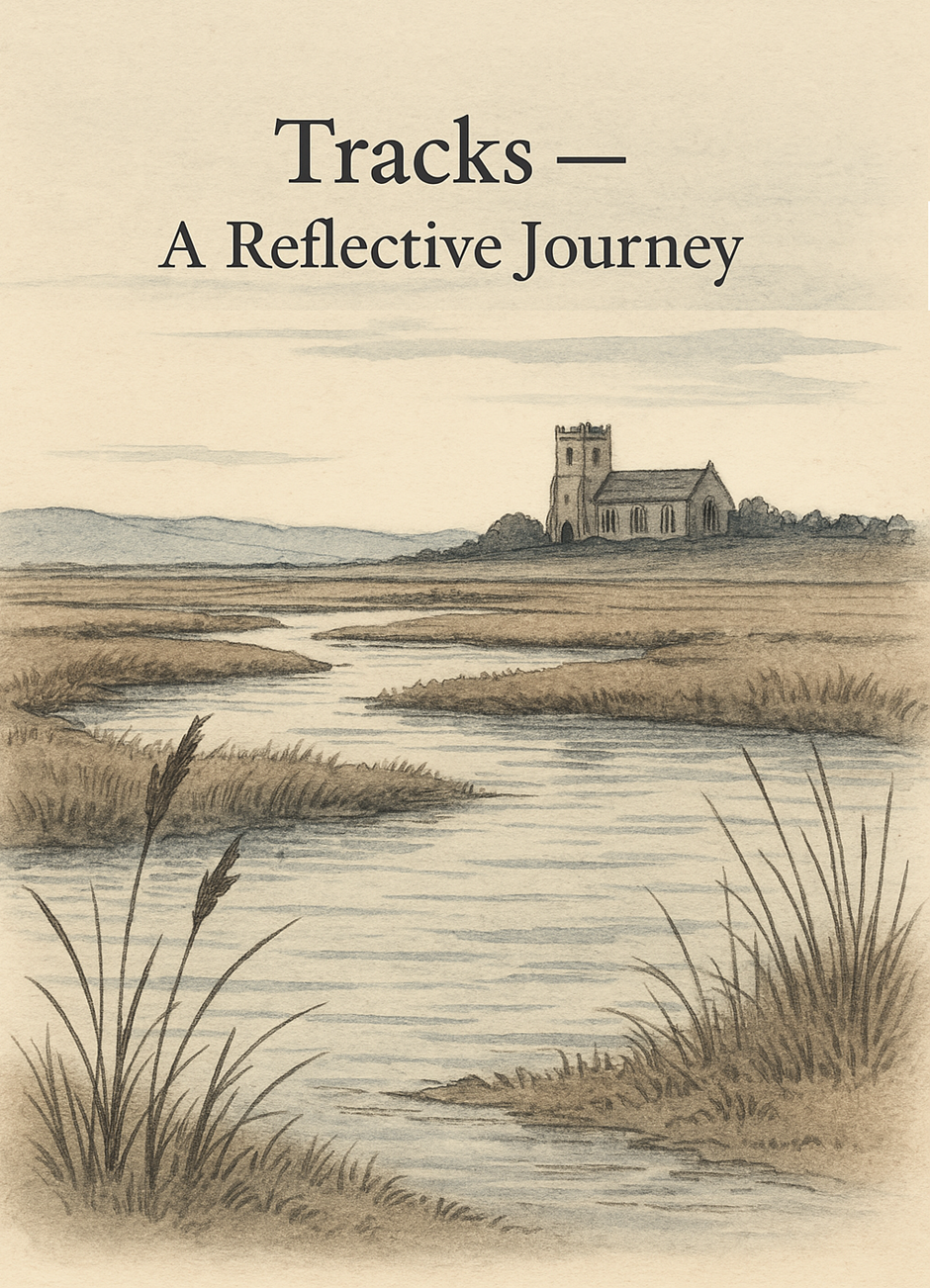
Tracks: A Revision after a Decade


The tracks hold signs of wisdom planted
Full deep in the way. Here a flame
Burns and flickers, flickers, burns
And lights rocks against rock,
Another shadow, a different shade,
A shiver of memory thrust to mind.

At the broken stile, a figure stood.
Not stranger, not guide.
He said:
What you carry was not gathered,
But given—before the path began.

To survive in this wild place
In this wilderness scaffold, simply face
The shades as they speak of times made strange
By current tread.

The dead speak in fire,
Not in voice or name.
Hold fast to that light. It shines
Miraculous, though too often maligned.


-          -    Kelling July 2015/Oxon July 2025

  • Stanza 2 developed with  assistance of Co-Pilot AI, with reference to Eliot's "Compound ghost" in "Little Gidding"


G


T

Thursday, 17 July 2025

Inclusion as Evolution and Strength: An Alternative View

A critical enquiry into the moral and philosophical basis against boundary-making in post-liberal societies

Tolling for the aching ones whose wounds cannot be nursed / For the countless confused, accused, misused, strung-out ones and worse.  - Bob Dylan "Chimes of Freedom"

And rest yourself ’neath the strength of strings / No voice can hope to hum. - Bob Dylan "Lay Down Your Weary Tune"

In contemporary political discourse, the concept of inclusion often finds itself under scrutiny. Critics argue that inclusion without boundaries leads to moral entropy and societal fragmentation. However, here, I offer some arguments that inclusion, far from being a surrender of values, represents an evolution of moral and civic strength.

Liberalism’s Moral Depth

Liberalism is frequently criticized for its emphasis on individual rights, which some interpret as a neglect of communal duties. Yet this dichotomy is misleading. Liberalism fosters civic duties such as participation, responsibility, and mutual respect. Philosophers like John Rawls and Martha Nussbaum have articulated a vision of liberal inclusion that demands engagement and justice, not passive permissiveness. Moreover, liberal universalism is grounded in human dignity, providing a moral foundation that has empowered civil rights movements to challenge unjust traditions.

The Misuse of Schmitt

Carl Schmitt’s friend-enemy distinction offers a compelling but dangerous framework for political identity. Historically, this binary logic has justified authoritarianism and exclusionary nationalism. Liberalism resists such framing not out of naïveté but from a recognition of the moral hazards inherent in defining identity through opposition. Pluralism, contrary to claims of fragility, thrives when institutions are robust and inclusion is paired with deliberation. Democracies such as the United States, Canada, and many European nations demonstrate that diversity can coexist with strong civic identity.

Tradition vs. Transformation

While thinkers like Roger Scruton and Alasdair MacIntyre rightly emphasize the value of tradition, it is essential to acknowledge that traditions can perpetuate injustice. Inclusion challenges traditions not to erase them but to refine them. Historical milestones such as the abolition of slavery, women’s suffrage, and LGBTQ+ rights emerged from this tension between tradition and transformation. Furthermore, models of hospitality need not be conditional. Radical hospitality, practiced in various faith and secular communities, welcomes without demanding assimilation, trusting in shared humanity over shared doctrine.

Inclusion as a Practice of Virtue

MacIntyre’s concept of "practices" underscores the importance of narrative unity within communities. However, this unity need not be exclusionary. Communities can embrace diverse voices while maintaining coherence—much like jazz, which is improvisational and plural yet deeply structured. Inclusion does not imply the abandonment of standards; rather, it calls for the co-creation of expectations rooted in democratic norms, human rights, and civic responsibility.

Boundary-Making Reimagined

Liberalism does not reject boundary-making; it redefines it. Boundaries should be negotiated through dialogue, not imposed through coercion. Inclusion fosters resilience through diversity, and tradition must be continually tested by justice. Persuasion and participation are more effective tools than coercion in maintaining social cohesion.

Conservative View

Liberal Counterpoint

Boundaries protect identity

Boundaries must be negotiated through dialogue

Inclusion erodes cohesion

Inclusion fosters resilience through diversity

Tradition is moral anchor

Tradition must be tested by justice

Coercion may be necessary

Persuasion and participation are stronger tools

Conclusion: Inclusion as Moral Maturity

Inclusion is often dismissed as sentiment unchecked by reason. Yet, when rightly understood, it embodies reasoned compassion. It is not the refusal to draw lines but the refusal to draw them in fear. A community that includes does not lose its soul; it discovers its depth. To include rightly, we must sometimes expand. Inclusion, therefore, is not erosion—it is evolution.

To include rightly, we must sometimes expand.


  • A thought experiment produced with assistance of Co-Pilot AI